


Inspiration
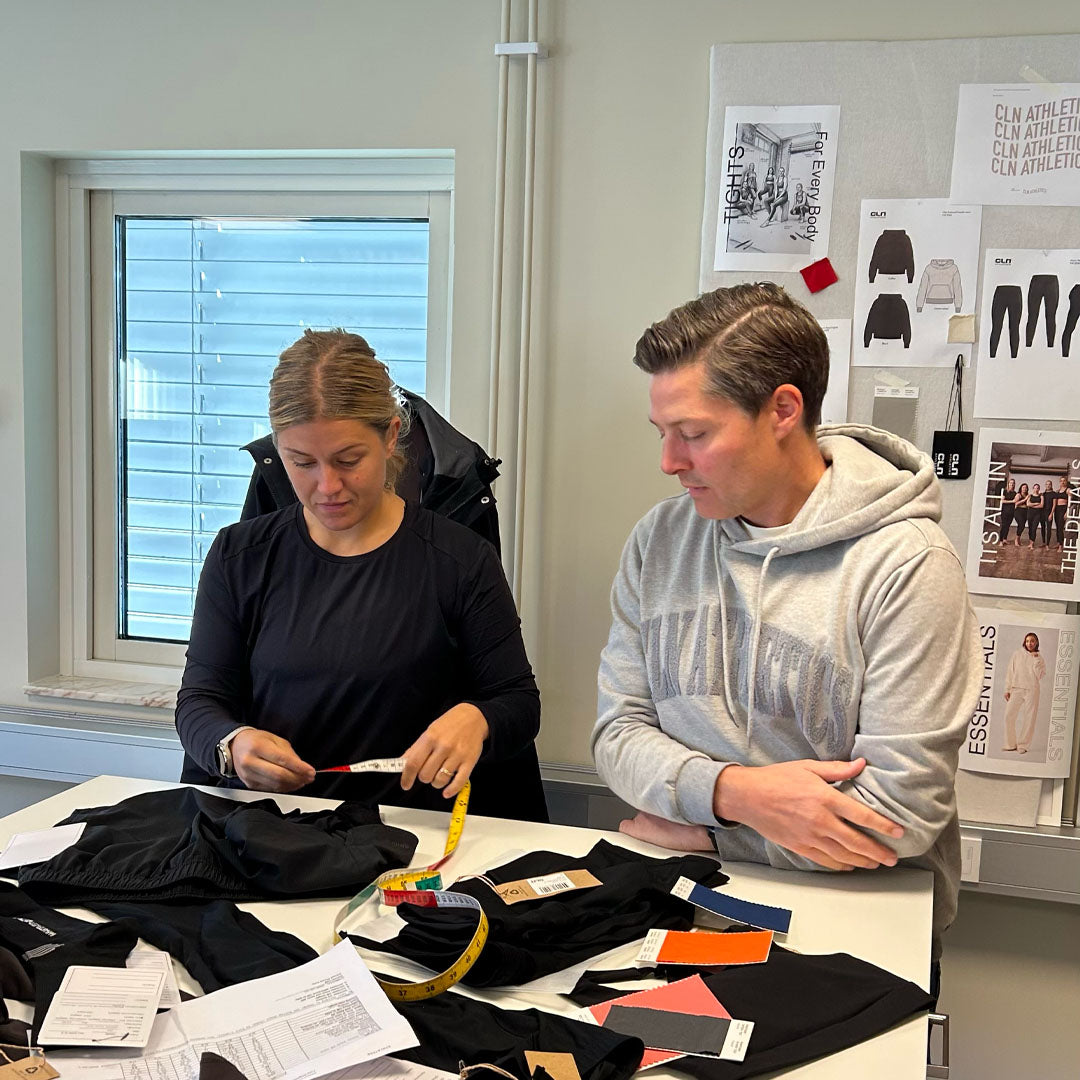

Workout Clothes – Build a Wardrobe That Actually Works
It's easy to end up in a situation where your workout wardrobe is full of clothes, yet you have nothing to wear. Old garments that have lost their shape, tops that never quite fit, and tights that slide down. The result? You just put on anything – and miss that feeling of being ready. Building a workout wardrobe isn't about having a lot. It's about having the right things. Step 1 – Start with the basics A functional workout wardrobe doesn't need to be large. A small, well-chosen wardrobe beats a large, cluttered one every time. Start with the garments you actually use for every session. The base for most people looks something like this: 2–3 pairs of tights or shorts (depending on the type of workout and season) 3–4 technical t-shirts or tank tops 1–2 sports bras (for women) or compression garments (for men) 1 mid-layer – a hoodie, zip-up top, or sweatshirt 1 outer layer – a light jacket or windproof training jacket That's all you need to cover most eventualities. The rest are additions that make everyday life easier. Step 2 – Think about material, not just appearance What looks good in a picture doesn't always perform well in the gym. Technical functional materials that wick away moisture, withstand repeated washing, and retain their fit are the cornerstone of a workout wardrobe that truly lasts. Looking for garments that last? Choose materials with breathability and good elasticity. Avoid garments that stiffen after washing or lose color quickly – they cost more in the long run. Step 3 – Think function first, style second There's nothing wrong with wanting to look good at the gym. But a workout garment that looks nice but chafes, sags, or restricts freedom of movement is a bad choice regardless of the price. Prioritize function. Then choose style within that framework – and you'll find that the best workout clothes are actually both functional and stylish. Step 4 – Adapt to your training Do you hit the box five days a week? Prioritize durable garments with freedom of movement. Do you practice yoga and pilates? Choose soft, stretchy materials. Do you run a lot? Lightweight, breathable garments with reflective details are a smart choice. A workout wardrobe is personal. Build it according to your everyday life, your goals, and your training style – not according to what happens to be trendy right now. Matching sets – a simple trick One of the easiest ways to feel put together and ready is to wear matching workout garments. It's not about vanity – it's about reducing clutter. When you know you look good, you can focus on what really matters. At CLN Athletics, there's a wide range of matching sets for men and women – designed to maintain style and perform technically. Invest in quality Cheap workout clothes cost more in the long run. They lose their shape, stop working, and need to be replaced quickly. Instead, invest in a few well-made garments that you know will last – and that you actually look forward to putting on. Explore CLN Athletics' complete range for men and women.
Learn more
T-shirt - Training with functionality and design
The Workout T-shirt: The Garment That Deserves More Attention It's taken for granted. Thrown on without much thought. And yet – a good workout garment makes all the difference to how a session feels. We're talking about the t-shirt. The most used item in the workout wardrobe. More Than Just a Layer of Fabric A workout t-shirt does its job in the background. It shouldn't be seen, it shouldn't interfere – it should just work. But when it doesn't work, you notice it immediately. The fabric that sticks. The seams that chafe. The garment that becomes heavy with sweat. Suddenly, the workout isn't about performing, but about enduring. That's why the choice of t-shirt matters, whether you're doing a calm morning session or an intense workout. Cotton or Functional Material – What's the Difference? It's tempting to reach for the familiar cotton t-shirt. It's soft, well-known, and inexpensive. But for working out, it's actually one of the worse choices. Cotton absorbs sweat without wicking it away. This means the garment quickly becomes heavy, sticks to the body, and dries slowly. In cold weather, it can even make you feel cold. Functional materials – such as polyester, nylon, or blends with spandex – work the opposite way. They draw moisture away from the skin, dry quickly, and retain their shape session after session. It's not just technology for technology's sake. It's technology you actually notice. Fit – Loose or Tight? It depends entirely on what you're training and what you prefer. Looser fit provides freedom of movement and air circulation – good for strength training, running, and crossfit. Tight fit follows the body more precisely – popular for yoga, pilates, and cardio sessions. There's no single right answer. But there is an answer that's right for you – and you'll find it most easily by trying it out. Workout T-shirt for Men The men's workout shirt has long lived in the shadow of shorts and workout shoes. But the right shoulder width, the right neckline, and a breathable material are what determine whether a gym look fits or just looks unclear. CLN Athletics men's t-shirts are designed to combine function and style – garments that work in the gym but that you can just as easily wear on your way home. Workout T-shirt for Women A women's workout t-shirt needs to be versatile. It should work with a sports bra underneath, have the right length for tights, and be stylish enough to be worn outside the gym. At CLN Athletics, you'll find a wide selection in stylish colors and modern cuts – garments that make it easy to look good without trying too hard. Choose Your T-shirt Carefully Next time you're shopping for workout clothes – pause for an extra second at the t-shirts. Feel the material. Check the seams. Try on the fit. It's a small garment with a big impact on how every workout feels. Find your favorite among CLN Athletics' collection for women and men.
Learn more
Sweatpants – comfort and style without compromise
There's a garment that leads a double life. It carries you through quiet mornings with coffee, but performs just as well during a light workout. It's comfortable enough for evenings at home, but stylish enough to wear out the door without hesitation. We're talking about sweatpants – and they've become significantly more than just loungewear.The sweatpants revolutionFor a long time, sweatpants were synonymous with giving up. But that view is outdated. Today, sweatpants are an essential part of a well-thought-out wardrobe – not despite their comfort, but thanks to it.The athleisure trend has made it acceptable, even desirable, to blend comfort with style. And sweatpants are at the core of that expression.What makes good sweatpants?Not all sweatpants are created equal. What distinguishes really good sweatpants from a cheap variant is primarily noticeable in three things: The material – Soft, airy materials that regulate temperature and maintain their shape wash after wash. Neither too thick (sweaty and heavy) nor too thin (loses shape and coverage). The fit – Sweatpants should fit comfortably without being baggy. The right fit – whether tapered, straight, or wide leg – makes you look thoughtful even when you're relaxed. The construction – Details like an elastic waistband with a drawstring, smooth pockets, and well-sewn seams that don't chafe. Things you take for granted until they're missing. Sweatpants for trainingSweatpants are not a pure training garment – but they can certainly be part of your training routine. Warm-ups, cool-downs, yoga, stretching, or light strength training at home are all situations where sweatpants work excellently.Choose a pair with good mobility and a material that doesn't collect sweat, and you have an all-round garment that covers more than you think.Sweatpants for everyday lifeThe true strength of good sweatpants is how naturally they move between contexts. Breakfast at home, a light walk, a quick errand – all without changing. That's efficiency in clothing form.Pair with a clean t-shirt and a pair of clean shoes, and you have a look that works effortlessly.CLN Athletics loungewearAt CLN Athletics, loungewear is designed with the same care as other training clothes. The materials are chosen to be comfortable against the skin and last a long time, and the fits are developed to work on real bodies in real movements.Sweatpants in the Dynamic and Essential collections are examples of garments that take you from morning to evening without compromise.It's time to stop seeing sweatpants as an exception. They are a choice – a good one.Explore CLN Athletics sweatpants for women and sweatpants for men.
Learn more
Training jackets – the right outerwear for every workout
It's the garment you put on last and take off first – but it's also what determines if you're truly ready to go outside. The training jacket is the outermost layer, but far from the least important. It protects, warms, signals, and completes a look. And when it's right, you notice it immediately. Why the training jacket matters Many see the training jacket as a practical accessory. But a good outer garment for training does more than just keep you warm. It regulates temperature, wicks away moisture, and allows you to move freely – without ending up in a situation where you are either too hot or too cold. For those who train outdoors – regardless of the season – it is often the jacket that determines whether the session actually happens or not. Different jackets for different needs There is no universal jacket that suits all situations. However, there is a jacket for your specific situation – and it's worth knowing the difference. Light windbreaker / running jacket – Thin, light, and packable. Protects against wind and light rain without generating heat. Perfect for running and cycling when you generate your own body heat but need a layer against the elements. Zip-up sweater / fleece jacket – Mid-layer that warms without restricting. Good for warm-ups, cool-downs, and sessions in indoor environments with varying temperatures. Works just as well as a layer under a heavier jacket in winter. Hooded training jacket – The versatile favorite. Warm, flexible, and stylish. Suitable both at the gym and on the way there. Choose a model with stretchy material and mobility seams for maximum freedom. Padded training jacket – For cold mornings and winter days. Provides warmth without being heavy and is often designed to be combined with other layers underneath. What should you consider? Mobility above all – A training jacket that restricts shoulder mobility or pulls up at the waist is not a training jacket – it's just a jacket. Choose models with ergonomic cuts and stretchy materials. Moisture transport – Just like other training garments, a good training jacket should wick away moisture. Otherwise, you'll end up in a situation where the inner layer is wet and the jacket traps the moisture. Details that make a difference – Zip pockets, thumbholes in the sleeves, reflective details for running in the dark, and adjustable cuffs are examples of details that elevate a jacket from a layer to a smart training garment. From the gym to the street One of the training jacket's true strengths is that it rarely stays in the gym bag. A well-designed training jacket works just as well on the way to work, during a walk, or for a spontaneous errand. It's a garment that lives outside its original context – and that's precisely what makes it a smart purchase. CLN Athletics training jackets At CLN Athletics, training jackets are designed to keep you moving, regardless of weather and situation. With a focus on fit, material, and durability, each jacket is the result of careful material selection and smart constructions. Whether you're looking for a thin layer for your morning run or a warm training jacket for chilly autumn days – you'll find it in CLN Athletics' collection. The right jacket means you'll never make excuses. Dress right – and get out there. Explore CLN Athletics' training jackets for women and training jackets for men.
Learn more
Training in snow
Are there advantages and how do you do it in a smart way? Exercising when the snow is white can feel like a resistance in itself. Cold. Slippery. Dark. At the same time, it is during the winter that many people notice how much exercise actually means for both body and mind. The question is whether there are advantages to exercising in snow and how to do it in a way that feels safe and sustainable. Are there benefits to training in snow? Yes. Actually more than you might think. When you exercise in snow, you activate more muscles than during the same workout on bare ground. The surface is uneven, which means that the stabilizing muscles in your feet, legs, and torso work harder. This can strengthen your balance and body control over time. The cold also means that the heart rate often becomes slightly higher at the same pace. This means that even calmer sessions can have a good effect. Many also experience a mental boost. Getting outside despite the snow and cold gives a feeling of strength and continuity that is difficult to replace. Advantages in brief: • More muscle activation • More effective cardio training at a leisurely pace • Mental strength and better routines • Fresh air and daylight even during dark months Layers of clothing make a difference When it's cold outside, training isn't about dressing warmly, it's about dressing right. Layers of clothing allow your body to regulate its temperature even when the pace varies. A good basic idea: • Inner layer that transports moisture away • Midlayer that keeps you warm • Outer layer that protects against wind and snow The most important thing is that the clothes follow the body and allow movement. Clothes that are too tight can feel cold when sweat cools down. Clothes that are too loose can cause chafing or feel bulky. Fit plays a bigger role than many people think, especially in winter. There is natural internal link potential here to guides on material selection and how to choose workout clothes for different temperatures. Running versus powerwalking in snow Not all forms of exercise work the same when the snow comes. This doesn't mean that something is right or wrong, but rather that it's about needs and conditions. Running in snow Running in snow places higher demands on technique and balance. The stride is shorter and the pace is slower. That's okay. The advantage is that the load is often more even and the body is forced to work in a more controlled manner. Well suited for you who: • Have a running habit • Want to continue your routine year-round • Have shoes with good grip or spikes Powerwalk in snow Powerwalking is an underrated wintertime option. You get your heart rate up without the same impact load and can focus more on posture and pace. Well suited for you who: • Want to exercise gently • Coming back after break • Prioritizes continuity over performance Both options are effective. The most important thing is that the training is done. Safety tips for winter training Safety is part of sustainable training. Reducing the risk of falls and accidents gives you the courage to continue even when conditions are worse. Consider this: • Use spikes if slippery. • Make sure you are visible with reflectors • Adjust the pace to the surface • Warm up your joints and muscles a little extra • Choose known rounds where you know what the surface is usually like Small adjustments make a big difference to safety! Summary Training in the snow isn't something you have to put up with. It can actually be something that gives you more in return than you think. With the right attitude, the right clothes, and reasonable expectations, winter training can be both effective and sustainable. At CLN Athletics, everything is based on the idea that training should work in real life. For different bodies. Different paces. Different seasons. When the clothes fit correctly and do their job, the focus can be where it belongs. On the movement and the feeling afterwards. If you want to continue exercising even when the snow falls, it is often the small choices that determine whether it becomes a struggle or a habit that lasts over time. The text is written by Simon Hallberg Fitness lover & writer Published: 2026-01-12
Learn more
Tights
There are garments that just work. That fit exactly as they should, that you never think about during your workout, because they are never in the way. Workout clothes come and go, but a good pair of tights is something you'll return to again and again. Why tights are more than just a garment Tights are one of the most versatile garments in a workout wardrobe. They work just as well at the gym as on a morning run, on a yoga mat as in a CrossFit box. It's not about following a trend - it's about finding a fit that gives you the freedom to move exactly as you want. What distinguishes a good pair of tights from a mediocre one is not always visible in a picture. It's noticeable when you squat and the fabric doesn't sag. It's noticeable when you run and your leg glides smoothly without anything chafing. What to consider when choosing tights? Fit and waist A high waist provides support and stays in place even during intense movements. It's not just about aesthetics - it's about being able to focus on your workout, not on pulling up your tights every other minute. Material and moisture wicking Technical materials that wick sweat away from the skin keep you dry and comfortable. Avoid cotton for training - it absorbs moisture but doesn't wick it away, which quickly makes you feel heavy and wet. Compression vs. mobility Some tights are designed with compression in mind, which increases blood circulation and can provide better support during heavy lifts. Others are softer and more mobility-adapted - perfect for yoga, Pilates, or running. Consider what you train most and choose accordingly. Pockets A detail that makes a big difference in everyday life. Pockets on your tights allow you to carry keys, cards, or your phone without needing a bag. Seamlessly integrated pockets are even better - they keep things in place without disturbing the fit. Tights for women and men Tights are no longer exclusively a women's garment. More and more men are training in tights, and for good reasons. They provide freedom of movement, support, and a fit that loose training pants rarely can match. Whether you're doing strength training, running, or yoga, a well-fitting pair of tights is a smart choice. For women, there is a wide range, from high-waisted biker shorts to long training pants with details that make them equally at home in the gym as on a walk afterwards. Tights from CLN Athletics At CLN Athletics, all tights are designed with a focus on fitting correctly, lasting a long time, and feeling good against the skin. Collections like Fuse, Aspire, and Dynamic are developed to meet different training needs - with the common denominator that they should give you a pair of tights you actually want to wear every day. The right tights are not just a functional garment. They are an investment in how you train and how you feel while doing it. Explore all tights for women and men at CLN Athletics.
Learn more
Clothes for training in the cold
Working out outside in the cold can be tough, but it's also a chance to strengthen both body and mind. With the right clothing, it's not only possible, but really comfortable. At CLN Athletics, we have a long history of developing workout clothes that work when the weather is challenging. Experience shows that layering is key. A base layer in technical material wicks away moisture, a warming mid layer keeps you comfortably warm, and an outer layer protects against wind and moisture. It creates a balance where you can move freely, without freezing or getting too hot. We design our garments with both function and feel in focus: a fit that follows the body, materials that breathe and last a long time, and a stylish design that feels right every time you put them on. All so that you can feel confident that the clothes will deliver, regardless of the temperature. For us, it's simple: the cold should never stop you. The right clothes make training outside an experience you actually look forward to." The text is written by Simon Hallberg Fitness lover & writer Published: 2025-10-01
Learn more
Compression garments for recovery
Recovery is just as important as the workout itself. It's where your body rebuilds the strength you just broke down. Compression garments can be a game changer for helping your muscles recover. By increasing blood flow, they reduce stiffness and fatigue, and make you feel fresher faster. But compression isn't just about function. When the garments fit close to the body, follow your movements and feel stable against the skin, you also get a sense of security and extra focus. It's like a light support that reminds you that your body is ready, whether you're charging for the next workout or winding down after a long workout. At CLN Athletics, we see compression as part of the whole: stylish garments that provide both effect and feel. Comfortable enough for everyday life, technical enough for training, and designed to work for every body. So that recovery feels as natural as the training itself." The text is written by Simon Hallberg Fitness lover & writer Published: 2025-10-01
Learn moreWash workout clothes
Training clothes are built for performance. But to maintain their function and feel fresh over time, you need to take care of them properly. Here are our best tips for making your favorite garments from CLN Athletics last longer and perform optimally, wash after wash. 1. Wash as soon as possible after your workout After a tough session, it's tempting to throw your clothes in the laundry basket or leave them in your bag. But sweat and moisture quickly create an environment where bacteria thrive – and that's what causes bad odors, not just the sweat itself. Here's how: Hang clothes to dry if you can't wash them immediately. Do not store them crumpled in a bag or laundry basket. Ideally, wash within 24 hours to reduce bacterial growth. 2. Turn garments inside out before washing The inside collects the most sweat and bacteria – and that's where the most odor comes from. Turning your workout clothes inside out helps with both hygiene and protecting prints, logos, and outer materials from wear and tear. Benefits: More effective cleaning where it's needed most. Longer lifespan for colors, prints, and textures. 3. Use cold water – 30 to a maximum of 40 degrees Celsius Most workout clothes are made from technical functional materials that are sensitive to high temperatures. Washing in water that is too hot can damage the fibers, cause garments to lose their shape, and impair their moisture-wicking properties. Keep in mind: 30 degrees is sufficient to remove sweat and dirt. Avoid programs with pre-wash or high spin cycles. 4. Skip fabric softener entirely Fabric softener might feel like a fresh finish, but it's actually one of the most common reasons why workout clothes lose their function. It forms a film over the fabric and blocks breathability. Results of fabric softener: Garments breathe less → start to smell faster. Poorer moisture transport → feel sticky during workouts. Risk of elastane and stretch materials breaking down. 5. Use the right detergent – preferably for sportswear A mild detergent without perfume and bleach is gentler on technical materials. There are also special detergents for sportswear designed to effectively neutralize sweat odor. Tips: Avoid overdosing – it doesn't make clothes cleaner. Occasionally run an empty machine with vinegar to clean the machine of sweat and detergent residues. 6. Air dry instead of tumble dry The heat in a tumble dryer can destroy elastic fibers and cause garments to shrink or lose their shape. It's better to let your workout clothes air dry – preferably hung or laid flat. Best way to dry: Hang on a hanger in a ventilated area. Avoid direct sunlight which can fade colors. 7. Wash workout clothes separately Mixed loads with jeans, towels, or garments with zippers can create friction and damage the more delicate materials in your workout clothes. This is especially important if you have mesh garments, seamless tights, or clothes with detailed prints. Preferably wash separately: Workout garments (especially light and dark ones separated). Use laundry bags for extra delicate materials. Text written by Simon Hallberg Fitness enthusiast & writer Published: 2025-07-03
Learn more